
This is an account of how my book Emilia came to be.
Emilia is the western part of the province of Emilia-Romagna in northern Italy.
The photographs in this book were made in 2006-2007, walking through Bologna and the towns of Emilia with little more plan than to notice. I ignored the guidebooks, let the streets decide the route, and photographed whatever caught my attention: a union march in autumn mist, men in Modena talking after Mass, a couple in Parma in mid-argument, market traders and commuters moving through the piazzas and porticoes.
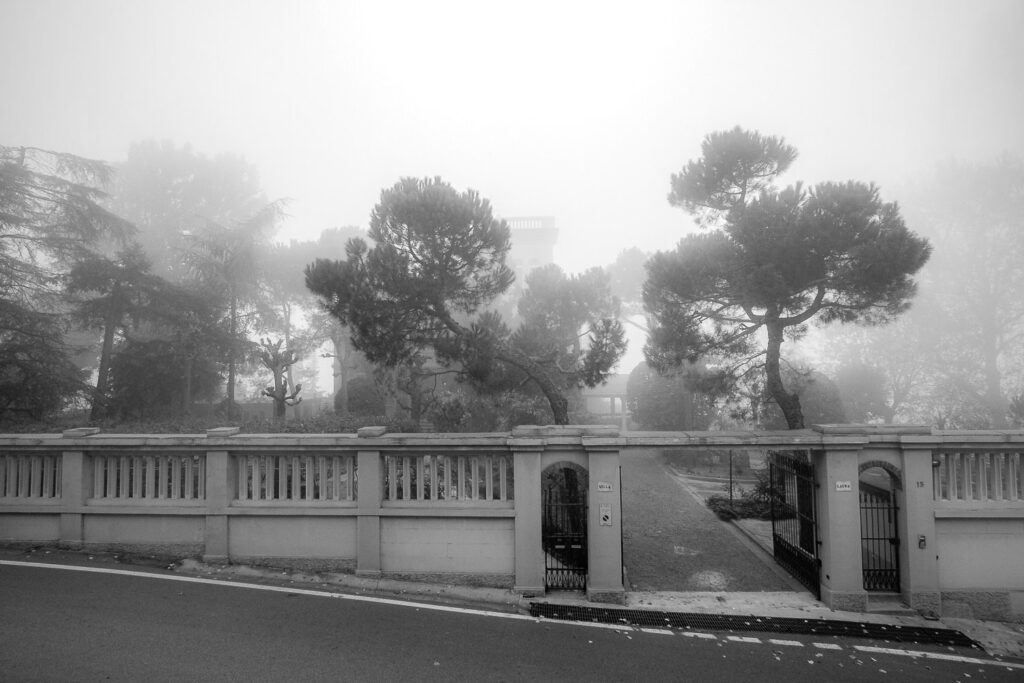
Nearly twenty years later I returned to the files and found a different project in them. The photographs were the same, but I was looking at them with different questions.
Surprises
The first surprise was technical. Emilia seems made for colour photography, yet I had worked almost entirely in black and white. At the time I was photographing Manchester: mill brick, wet pavements and glass office blocks. In Italy I had looked for the same things: texture, contrast and shadow.
Looking again, I could see how much that earlier work had shaped what I noticed: light catching a face beneath an arcade, mist across a square, hard shadows on a stone stair.

The second surprise was the people. In my recent landscape work, figures are often something I wait to leave the scene. In Emilia they are central. I had not set out to photograph people in places. They were the places. Looking through the work again, I found a photographer comfortable in crowds, watching small gestures: a hand on a shoulder, a cyclist pausing, a face turned slightly away.
Sequences
The biggest change came from treating the photographs as a sequence rather than as individual images. Once they were laid out together, relationships appeared that I had never looked for while making them.
One Sunday morning in Modena is a good example. I watched people walk towards the Duomo and slipped into the back during Mass. At the front the service was formal and intense. Further back, many people seemed content simply to be there.
Afterwards the piazza continued the same pattern. The service had ended, but people stayed behind talking in small groups. I made three photographs without thinking of them as connected. Years later they became a sequence.
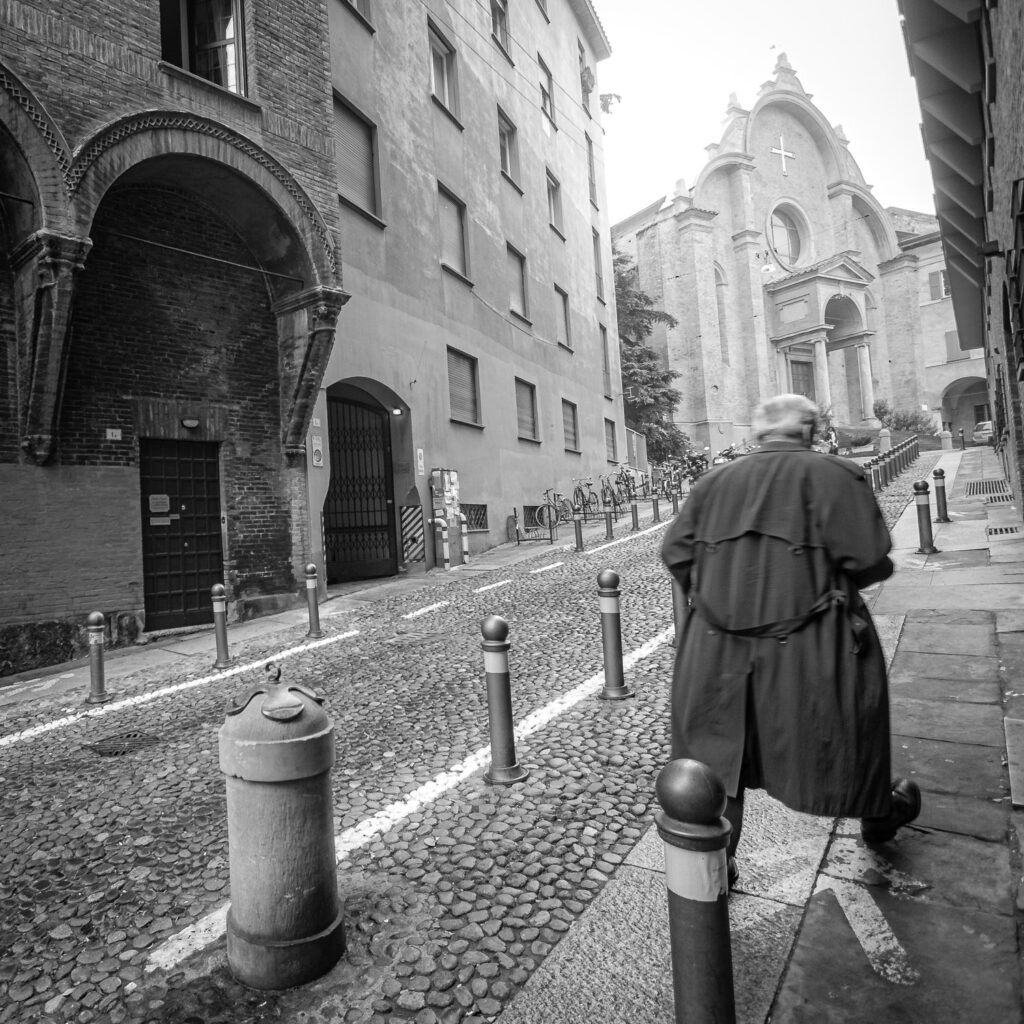
The first, made earlier in Bologna, shows a narrow cobbled street climbing between old buildings with a single figure walking uphill. When I made it, I responded to the shape of the scene. Looking at it now, I read it differently.
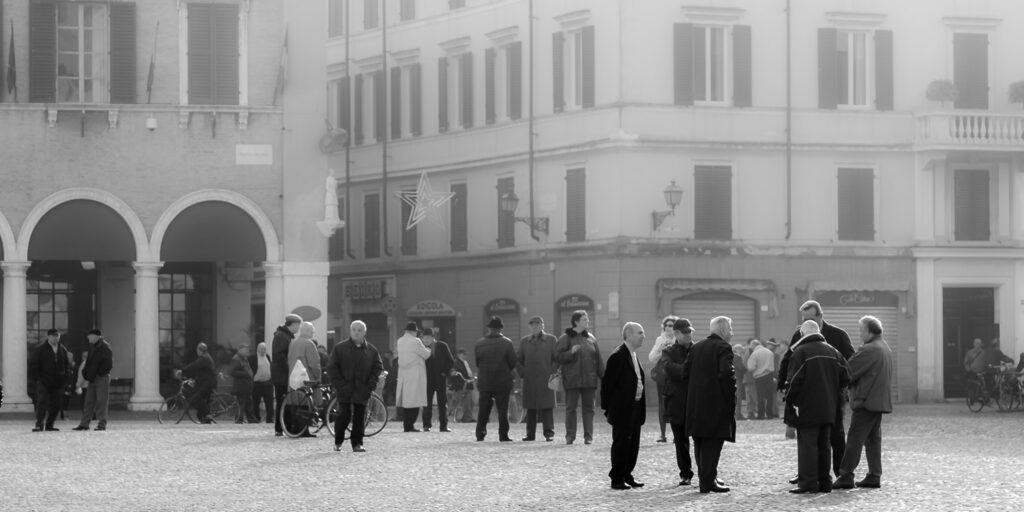
The second, in Modena, shows groups of older men talking in the corners of the square. There is warmth in the picture, but I also noticed something I had missed at the time: how few women appear in that public space.
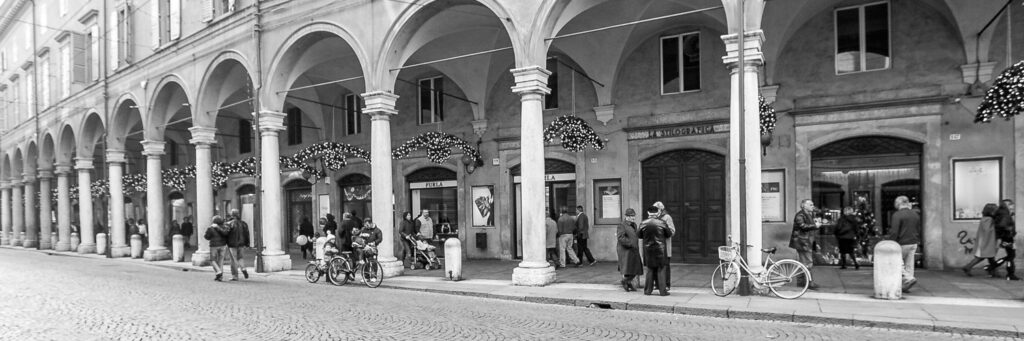
The third, also in Modena, follows a long colonnade lined with bicycles, children, couples and shoppers moving beneath festive lights.
Working this way lets you ask what the sequence contains that individual photographs do not. It also becomes easier to discard pictures that survived because they were difficult to make or depended on good fortune rather than because they strengthened the work.
Revisiting the images
Returning to Emilia also showed me something I had overlooked. In 2006 I photographed the life of the piazza without paying much attention to who was missing from it.
That does not make the photographs wrong. It changes how I read them. Looking again after many years lets me see both the photographs and my own assumptions more clearly.
This book records two journeys: the walks through Emilia in 2006-2007 and the return to the photographs nearly twenty years later. I have tried to leave the photographs to speak for themselves. Looking again was never about finding final answers. It was about seeing what I had missed the first time.