When we look at photographic images, are we clear how our own expectations affect how we respond?
Viewing images
Just the other day I was showing some photographer friends a few of my pictures from my Heron Wood collection. One of them leafed though 40 or so of my carefully crafted monochrome images then stopped on the very last picture. What had caught his eye was the pale strip of ground between the beans.
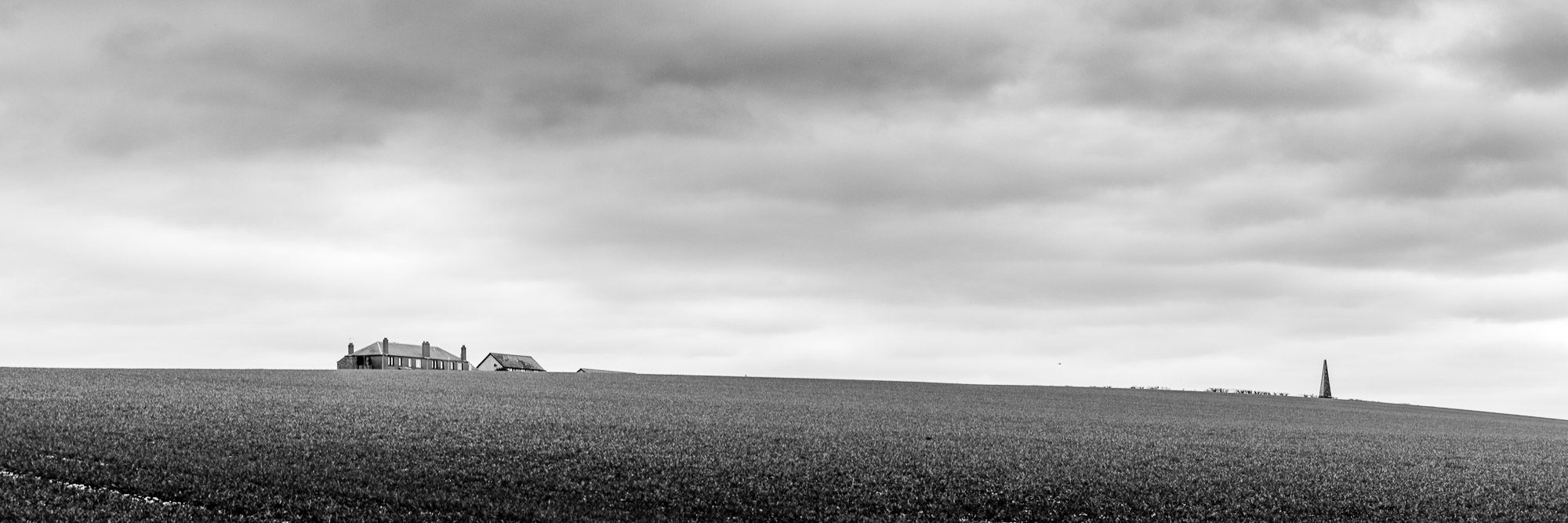
“I can’t help it”, he said, “but my eye gets drawn there, away from everything else”. Then he added, “I know it’s my problem – I really must stop doing that.”
I was irritated for a moment that, of all the things in my book he could comment on, he should pick this. I suppose I should be grateful he didn’t land on some of the other more egregious compositions elsewhere in the book!
What do we expect to see?
But it did start me thinking about how we each go about looking at images and how we each bring our own expectations of how images work to the activity. And that’s just fine. I was particularly interested though in how we deal with the times when the image doesn’t meet our expectation.
For context, The Heron Wood documents our local wood- and farm-land through the seasons of a year dominated by the waxing and waning of COVID-19. There are about 40 images, all monochrome, with the image in the article as the header for the Postscript where winter returns.
Ideas like bleakness and emptiness were running though my mind when I took this picture. You can see a field of crops leading up a hill to imperfectly seen cottages and an enigmatic obelisk, all under a lowering sky.
If you’ve followed the progression of the images through the book, you’ll probably get all of this. It fits in with the story, and the images are all recognisably from the same set with their somewhat flattened contrast.
Photographers’ expectations are different
Unless you’re a photographer! Photographers learn to check their own images for content that detracts from the story. They look for how they have caught the light just so. They check the image is sharp where it should be, and correctly exposed where it needs to be. And they look in the corners to make sure there’s nothing there that really shouldn’t be there. They try to make sure the image fits their viewers’ expectations. I know, I do it all the time!
But then, photographers also do the same thing when they look at other people’s images. It’s an automatic reflex developed over years of looking at pictures. So, inevitably, I should have expected the reaction I got to this particular picture. Undeniably, there IS something in the bottom left corner of the picture that many people would have left out, either by reframing, or cropping, or cloning in Photoshop.
Therefore it’s a mistake that spoils the image.
And it’s that last, rather judgemental, step that intrigues me. We tend to jump rather quickly from viewing an image in its context to a technical assessment separate from its context. Sometimes we’ll phrase the judgement in aesthetic terms – “distracting” is a favourite in these circumstances. And it all stems from our expectations about how images should work.
I think we’re missing a trick here.
We’re quick to assume we know that the photographer has fouled up. What we don’t do so easily is to consider why an experienced photographer did what he did. Could there be a reason he left that “distraction” in the image? How would that work?
Intentional distractions
In this image the splash of white in the corner does attract the eye. The viewer has his attention drawn away from the curve of the horizon, the houses, the obelisk and the clouds. You look down across the grey vegetation to the vestiges of a path, perhaps just a gap in the crops.
But not for long.
You go back to the horizon quickly enough. It makes the image feel wider. As your eyes move across, you find yourself pausing at the edge then moving over to the right. It goes some way towards emphasising the expanse before you. It doesn’t necessarily make for comfortable viewing. In the context of the rest of the images that’s a fair outcome.
So, when you see something you find jarring in an image, consider whether the photographer meant it to jar. Examine how it makes you feel, and just as importantly why. If your expectations of an image drive your reaction, try setting them aside for a moment.
Special pleading?
OK, maybe that’s special pleading after the event. Looking at it again some 6 years after I took the picture, these days I would probably do things differently. Maybe adjust the crop and leave the horizon looking even bleaker. And, more than likely, that white patch between the beans wouldn’t be there. But there’s something nagging me about that. It would be a more conventional image, but it wouldn’t be quite the same.
More articles On Seeing
-
Level horizons and constructive criticism
Level horizons are really just the tip of a critical iceberg. Here’s why you should consider going straight.
-
Material ingredients
Several years ago as we were building our new house, I was taken by the idea of recording some of the materials we used or found on the site.
-
Black and White Photography – Pictures for the Imagination
A very personal view of black and white photography.
-
Talk about your picture
Try this as an exercise. You’ve got three minutes. Describe your image and give me some idea of what motivated you. Intimidating? Impossible? Here’s how.
-
I saw the light
This year, a new camera has changed the way I take pictures. I’ll not break the habit of a lifetime – this won’t be a camera review – so this is all about how you see.
-
The value of a good editor
Finding someone else to help with editing our pictures and choose our collections can prove useful. It works in other fields; why not photography too?