Many photographers have a preferred genre, their comfort zone. A place where creativity arrives without conscious effort. It might be portraiture, or reportage. For me, it’s landscapes. There’s often a default feel you’re aiming for, a sweet spot of perspective, composition and image scale. This, for me, is the feeling I get from working with very wide-angle, or ultrawide, lenses.
Back in the day …
In the old days, cameras were cameras and sensors were little strips of plastic film. You bought your camera with a 50mm lens. The idea was this gave you a perspective close to your eyesight and wouldn’t be too much of a shock.
Even if you put something close-up in the corner of the viewfinder, you’ll find there’s not too much distortion. Pictures from the 50mm lens stand a good chance of looking “realistic”.

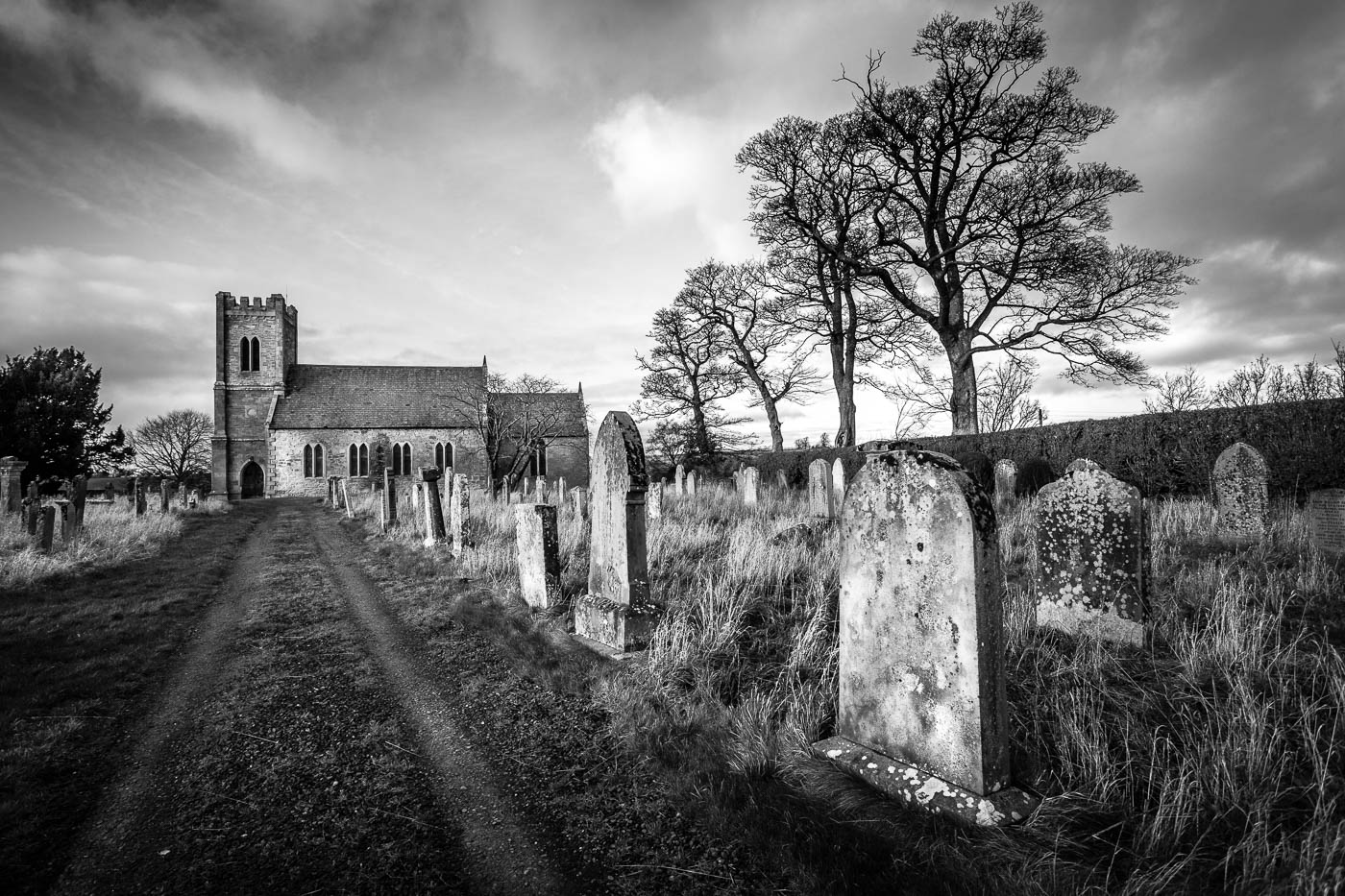
It’s ok for portraits if you get a little bit closer. And it’s ok for landscapes if you get a little bit further away. Compare the “upright” feel of the night-time graveyard with the more stretched feel of the church at the top
Of course if you wanted sweeping vistas you could always get a 35mm lens, or even more radically a 24mm lens.
Go wide
But for real drama with the potential for getting you right into the action, you need to go ultrawide. Something like 16mm on a full frame camera like the Canon 5D or 10mm on an APS-C camera like the Canon 7D. You’ll get a angle of view of about 95 degrees.

The usual problem when first using really wide angle lenses is quantity. You’ll see so much more in your viewfinder than before and you get seduced by the idea that you have to include it all.
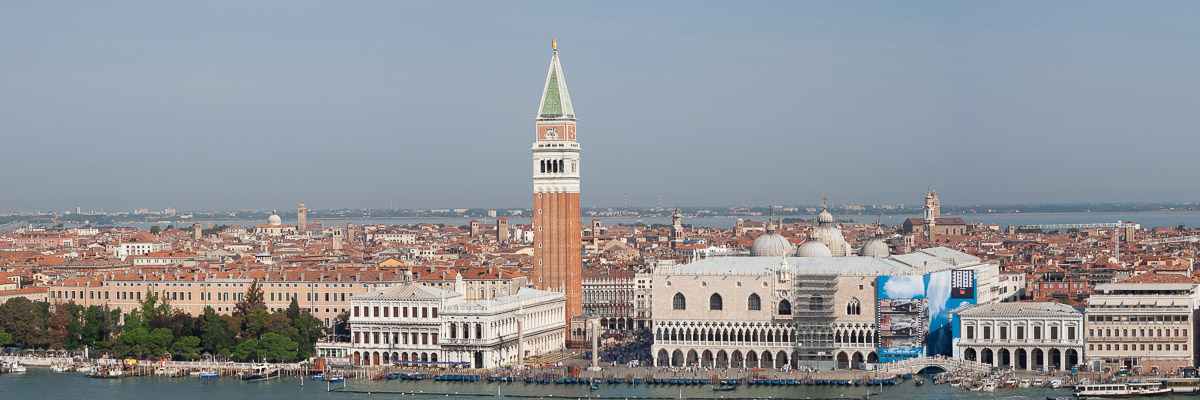
You end up being rather disappointed with the results because that horizon with the towering mountains becomes a boring plain with some hills. Even Venetian palaces lose something rendered by a wide angle lens with no foreground.
Get close
After a
Wide angle lenses aren’t just for wide pictures. They are really for deep pictures. Find your foreground interest and get close, really close, to it.

Even better, find some foreground interest that also carries your eye back into the picture. In this image of a Manchester warehouse yard, you follow the words on their white background back along the line of windows. Then you read the words along to the front again, taking in the typo and the missing word on the way.
The converging lines give the picture a depth that a longer lens would struggle to deliver.
The foreground matters
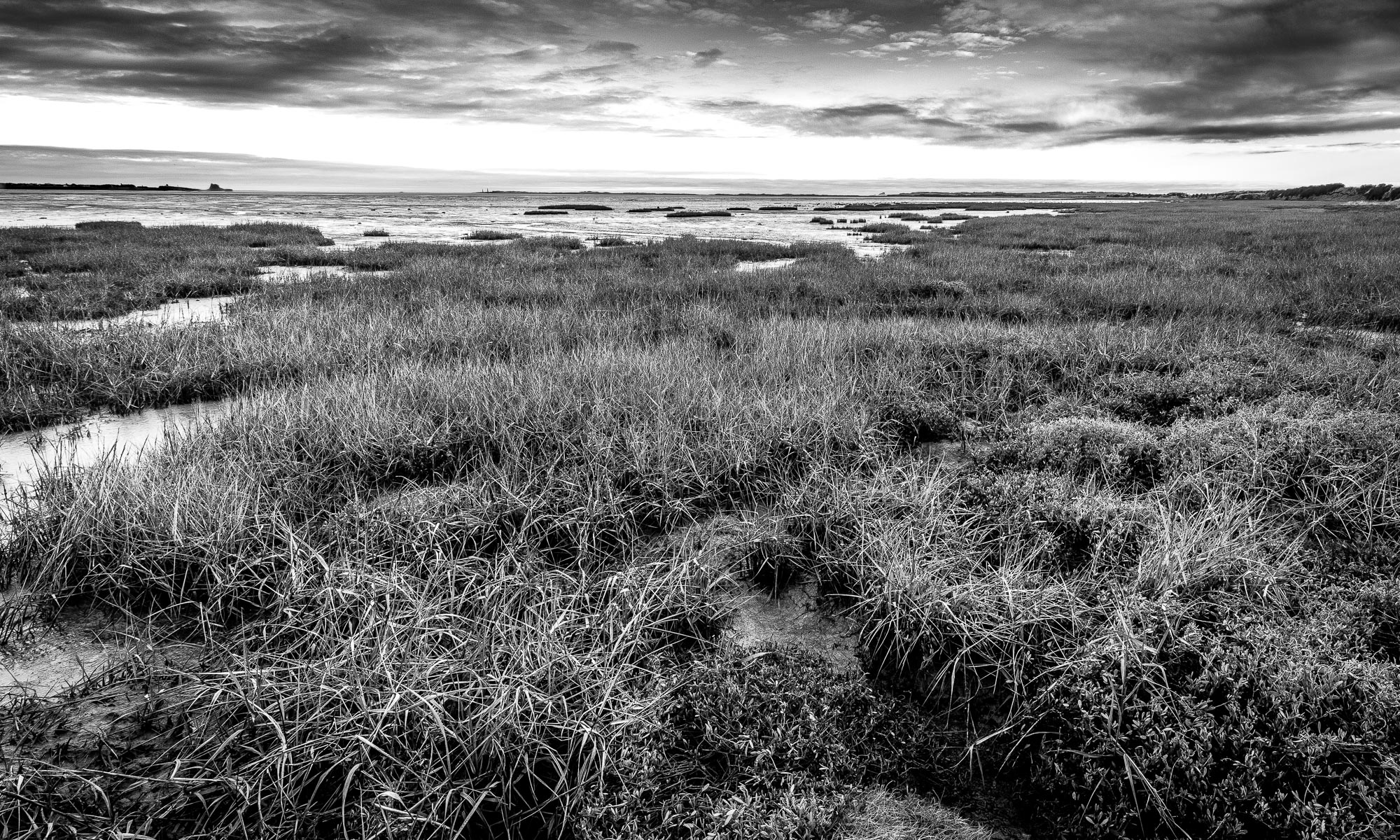
I rather like somewhat bleak looking landscapes like this one on the Northumberland coast where the background is deliberately low key. You might call it featureless even with Lindisfarne Castle on the skyline. However there is still some very detailed foreground content starting about 3 metres from the camera.

Again the wide angle lens emphasises the view across the pilgrims’ route to Lindisfarne across featureless terrain. (The panoramic aspect ratio helps too). Getting close to the first marker post gives your eyes something to latch onto before launching off over the empty sands.
Beware the edges
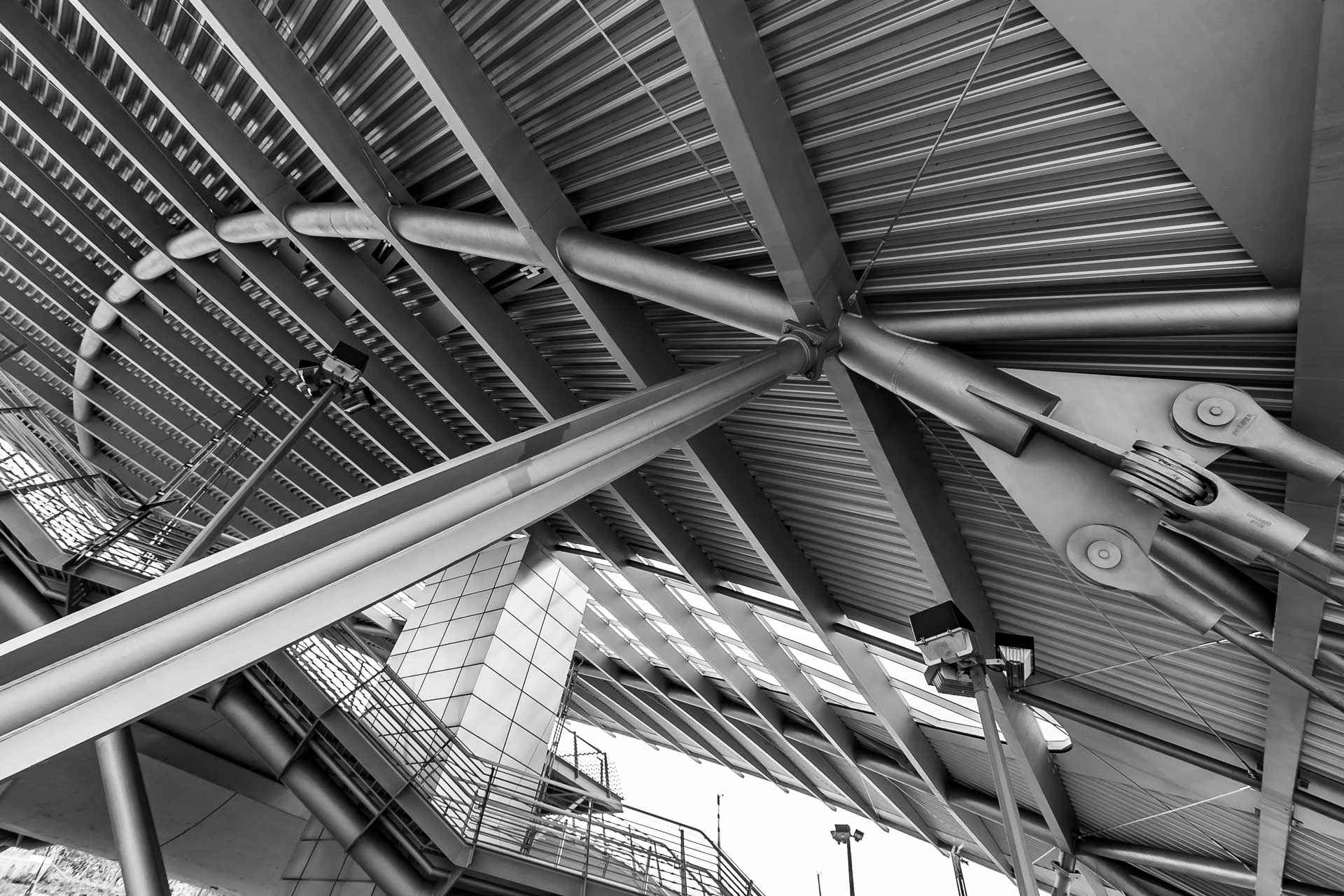
The danger of using very wide angle lenses up close is that you risk introducing unwanted distortion into the perspective. In this image the girder on the left is, in real life, vertical. But since I got so close to it, and placed it so close to the edge of the frame, it takes on quite a different charcter.
In this case, though, I think it works well enough, especially in conjunction with the sweeping line across the roof.
Check for distortion
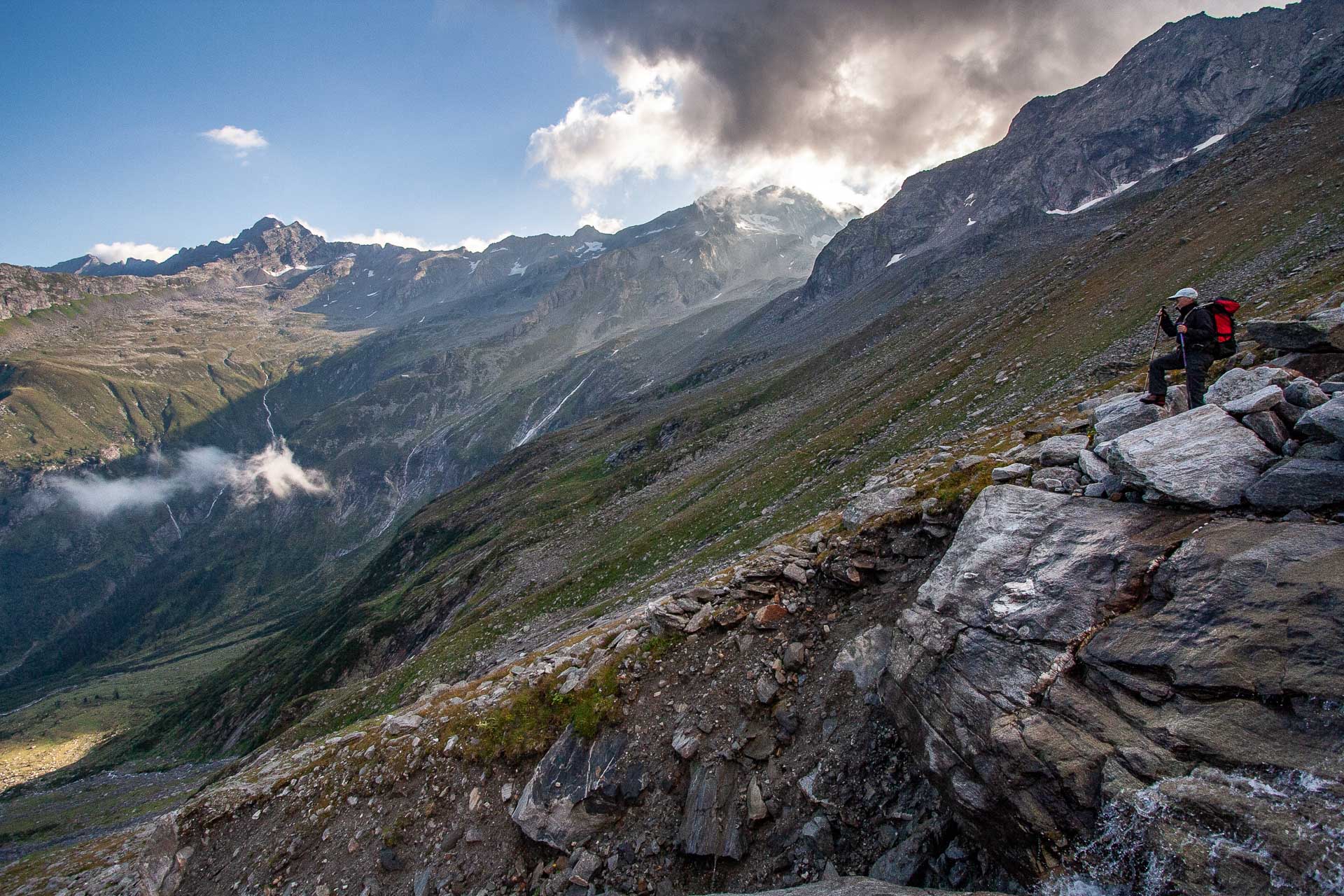
The distortion at the edge of the frame is clear in this picture. The mountaineer’s limbs are rather stretched. While maybe not so noticeable at the edge of the picture, it does distract us from the view beyond.

All is easily corrected by bringing the climber towards the middle of the frame. There is still distortion at the edges but it’s harder to tell that the boulders aren’t really that long. OK, so the composition isn’t quite as compelling. But I wasn’t going to ask her to get any nearer to that drop!
Why ultrawide is the one for me
What I like particularly like about using ultrawide lenses is the scope it gives me for getting my viewers’ eyes to sweep across even a small image as if they were there with me.

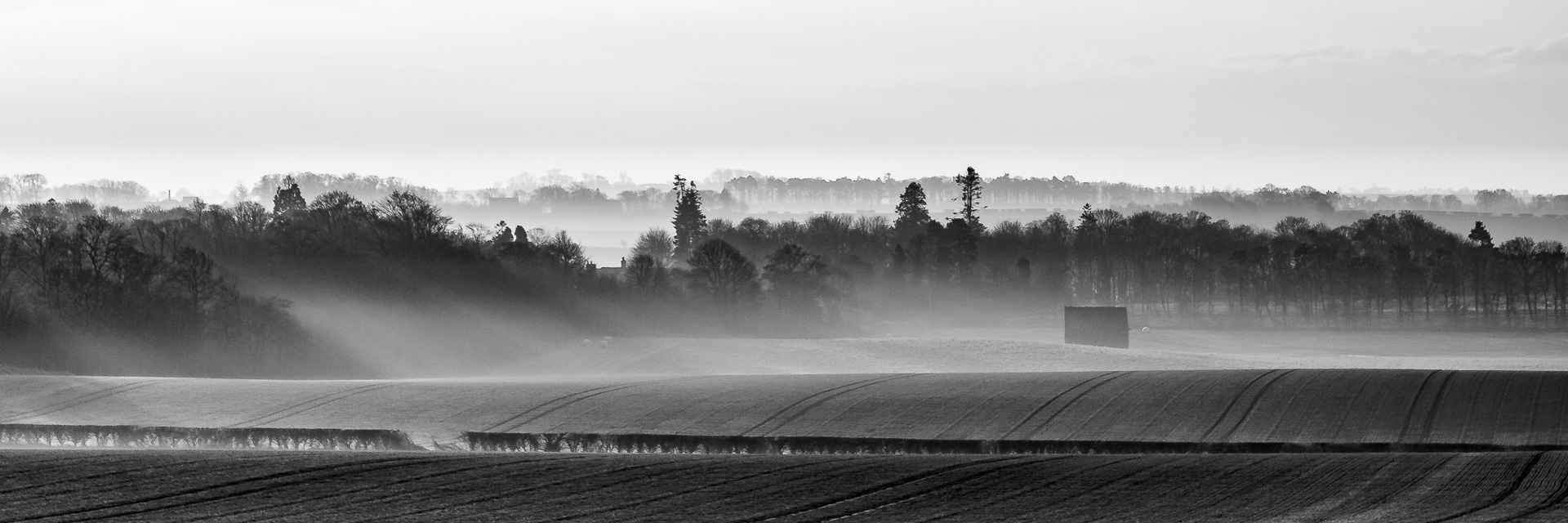
It’s really a bit of an illusion but the mild distortion in the pictures gives us a trigger to say “this is really wide, you’ll have to move your head to take it all in”. This is especially so when you crop your ultrawide image down to a narrow 2:1 aspect ratio, as in this picture of more trees by the Tweed.
Even looking at the small version of this picture, your eyes have to move to take it all in, from the trees far away on the left all way the over to the tips of the branches on the right.
Taking a step back, I’ve found this article and the website as a whole is actually teaching me a lot about my own photography. While I like pared-down images like the header picture of Gormley’s work at Crosby, I still find there’s something missing for me.
The common thread with the images in this article is not just about the wide angle,
I have learnt that the pictures that satisfy me most (taking and viewing) are those where a complex situation has been brought under control and the essential nature of it emphasised. Strong lines within chaos. Elements that follow on from each other, standing out from an otherwise overwhelming backdrop. The ultrawide lens certainly helps me see the possibilities more clearly
More articles on Landscape
-
In praise of trees
It might seem a bit odd starting an article on trees with something that is most certainly not a tree. For me though, it’s a tree in all but name.
-
Contract or assumption: what do I owe the viewer?
Is it realistic to expect a photographer to concern himself with his viewers expectation about the nature of photography?
-
Panoramas – taking the wider view
Exploring the potential of panoramas? From wide angle landscapes to more intimate close-ups.
-
From intentions to image – a worked example
In this article I describe some of the aesthetic decisions I made when processing a raw image file to get to this picture of Berwick Pier.
-
Landscape pictures are what, exactly?
Well, that’s an easy question to answer isn’t it? Landscape is a picture of natural beauty somewhere in the countryside. Isn’t it? There, done. We’ve put that in its box, move on. But not so fast. That just raises more questions than it answers.
-
Fiddlers Ferry Panorama 2011
This image was part of a panorama project I undertook for a client in Oldham in the UK. You can clearly see, from 40 miles away the Fiddler’s Ferry power station on the Manchester Ship Canal.